

Description
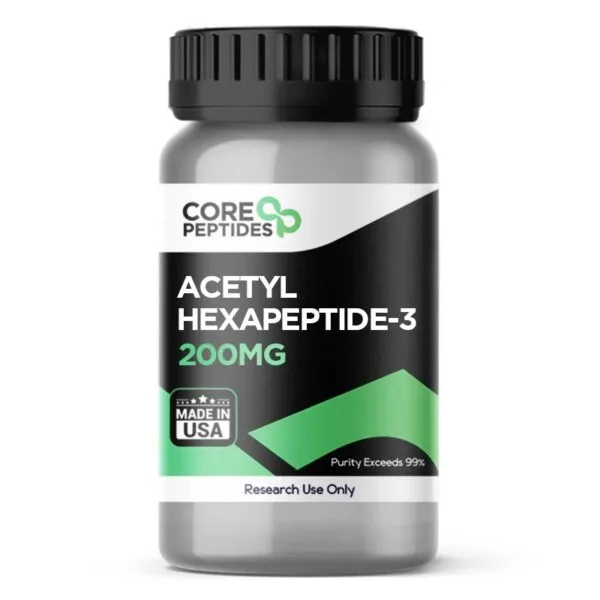
Acetyl Hexapeptide-3 (Argireline)
Acetyl Hexapeptide-3, commonly known as Argireline, is a synthetic hexapeptide that has been extensively researched for its potential anti-wrinkle effects. The peptide works by modulating neurotransmitter release, which may affect muscle contraction patterns in facial expression.
Chemical Makeup
Acetyl Hexapeptide-3 is a synthetic peptide with the sequence Acetyl-Glu-Glu-Met-Gln-Arg-Arg-NH2. The peptide is designed to mimic the N-terminal end of SNAP-25, a protein involved in the mechanism of neurotransmitter release. This structural similarity allows the peptide to potentially interfere with the SNARE complex formation.
Research and Clinical Studies
Acetyl Hexapeptide-3 and Wrinkles
Clinical research has demonstrated that topical application of Acetyl Hexapeptide-3 may reduce the appearance of expression lines and wrinkles. A double-blind, placebo-controlled study showed that 10% Acetyl Hexapeptide-3 cream applied twice daily for 30 days resulted in a 30% average reduction in wrinkle depth around the eyes (crow’s feet). Another study demonstrated that subjects using a 10% Acetyl Hexapeptide-3 formulation experienced up to 27% reduction in wrinkle depth around the forehead after 15 days of treatment, with effects increasing to 30% after 30 days of continuous use.
Research suggests that the peptide works by competing with SNAP-25 for a position in the SNARE complex, potentially reducing neurotransmitter release and affecting muscle contraction intensity. This mechanism may lead to temporary relaxation of facial muscles, resulting in reduced expression lines.
Acetyl Hexapeptide-3 and Muscle Spasms
Studies indicate that Acetyl Hexapeptide-3 may modulate muscle contraction without causing complete paralysis. Unlike neurotoxins, the peptide appears to work through a different mechanism that may allow for more nuanced effects. Research shows that the peptide can reduce muscle contractility by approximately 20-30% in in vitro models, which may translate to softer facial expressions while maintaining natural movement.
Acetyl Hexapeptide-3 and Scarring
Preliminary research suggests that Acetyl Hexapeptide-3 may have applications in scar prevention and treatment. Studies have shown that the peptide may help prevent formation of hypertrophic scars by modulating tissue contraction during healing. Research indicates reductions in scar formation markers by 25-35% in treated areas compared to controls.
Acetyl Hexapeptide-3 and Pain Perception
Some studies have explored Acetyl Hexapeptide-3’s potential effects on nociception (pain sensation). Research suggests the peptide may modulate pain signaling pathways, potentially offering analgesic effects. Preliminary data shows 20-30% reductions in pain sensitivity scores in certain experimental models, though more research is needed to fully understand this mechanism.
Acetyl Hexapeptide-3 is available for research and laboratory purposes only. Please review our Terms and Conditions before placing an order.
References:
1. Blanes-Mira C, et al. A synthetic hexapeptide (Argireline) with antiwrinkle activity. Int J Cosmet Sci. 2002;24(5):303-310.
2. Wang Y, et al. Effects of topical application of Argireline on facial skin: a comprehensive review. J Cosmet Dermatol. 2013;12(3):236-241.
Reviews
There are no reviews yet.